Then her bank declined a mortgage pre-approval application. The loan officer cited insufficient visibility into her existing payment obligations. Sarah hadn't missed a single BNPL payment. But the lender could sense enough scattered financial activity to get cautious, even without a full picture of what she actually owed. That gap between what BNPL apps show you and what your real debt load looks like has a name: phantom debt. And in 2026, it's starting to catch up with people the way it caught Sarah.
Here's what actually changed, why it matters even if you've never missed a payment, and exactly what to do about it.
In this article
What Actually Changed With BNPL in 2026
For years, BNPL operated in a kind of credit blind spot. You could split a purchase into four payments, pay every one on time, and it would never touch your credit score either way. Miss a payment, and in most cases, that didn't touch your score either. That invisibility was part of the appeal — it felt lower-stakes than a credit card, even when the dollar amounts were identical.
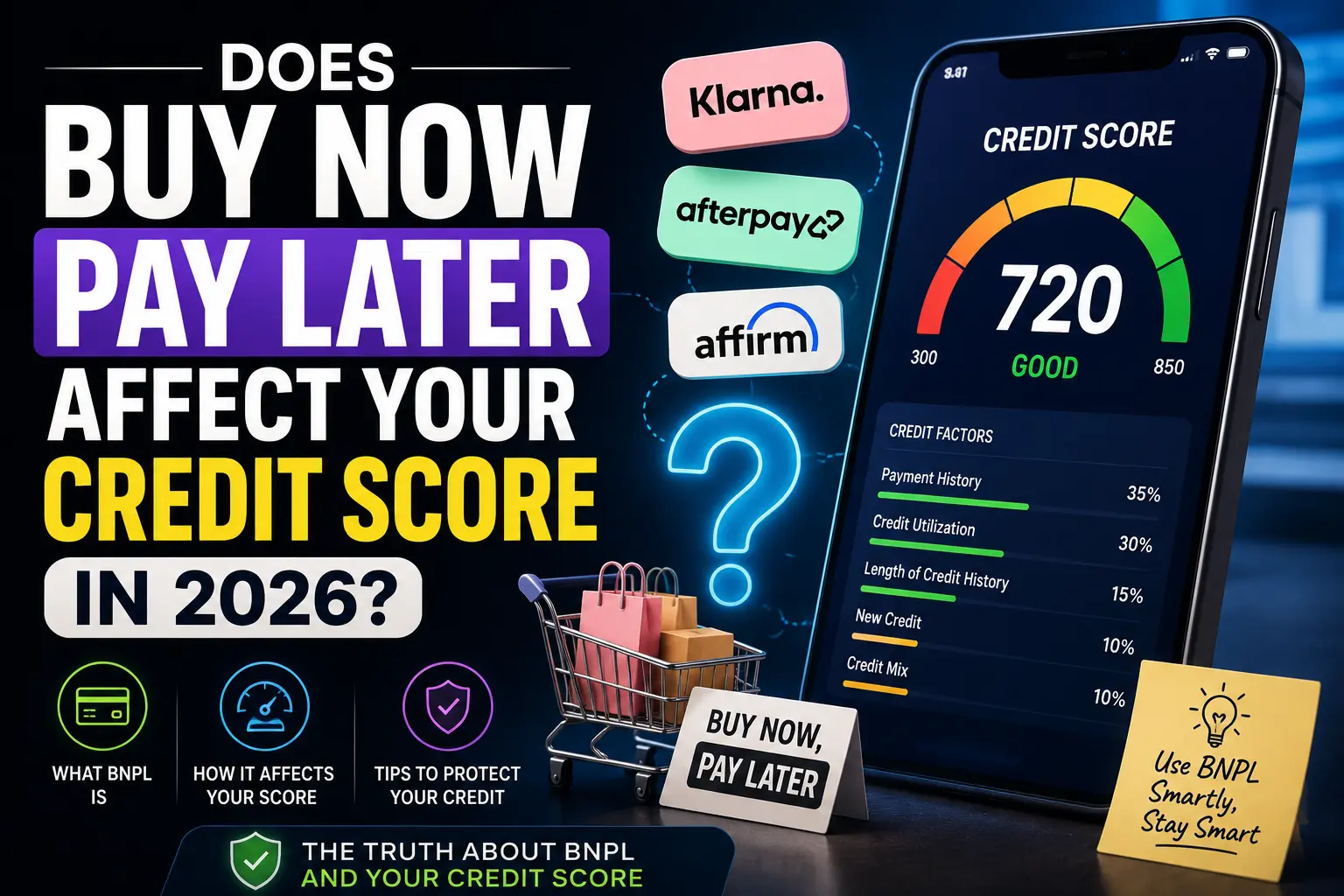
That's no longer the full picture. Affirm began reporting BNPL loans to credit bureaus in 2025, and FICO has built a new scoring model — Score 10 BNPL — that factors this payment data directly into your credit score. Klarna and Afterpay have moved more cautiously so far, but industry pressure to standardize reporting is mounting fast.
If you've been treating BNPL as "credit-lite" because it never touched your credit report, that assumption is no longer safe. A missed BNPL payment can now hurt your credit score the same way a missed credit card payment would — and unlike a credit card, you may not get a warning call before it's reported.
The "Phantom Debt" Problem, Explained
Sarah's mortgage decline wasn't really about one missed payment — she hadn't missed any. It was about a lender sensing debt it couldn't fully see. That's the core danger of BNPL: it's spread across multiple apps, each one only showing you your balance with them. Someone juggling Klarna, Afterpay, and Affirm at the same time can carry a real, meaningful debt load that no single app, and until recently no credit report, ever showed in full.
Researchers tracking this shift call it phantom debt — obligations that are entirely real and repayable, but functionally invisible to both the borrower doing the mental math and the financial system trying to assess their risk.
Who's Actually Using BNPL, and Why It Matters Now
This isn't a niche behavior anymore. More than half of Americans now use some form of Buy Now, Pay Later, and total US transaction value reached an estimated $70 billion in 2025, growing at roughly 20% a year since 2021.
The more telling shift isn't the growth, it's the why. BNPL is increasingly being used less for one-off discretionary purchases and more to bridge the gap between paychecks and cover everyday costs like groceries and bills. That's a meaningfully different risk profile than the original "split a $200 purchase into four payments" use case BNPL was built around — and it's exactly the pattern that leads to Sarah's situation: several small plans stacking up quietly until they add up to something real.
BNPL vs. Credit Cards: What's Actually Different
Where BNPL has the edge:
- Usually 0% interest if paid on time
- No hard credit check to get approved
- Near-instant checkout approval
- Fixed, predictable payment schedule
Where BNPL falls short:
- Easy to lose track of across multiple apps
- Can now affect your credit score if you're late
- Fewer consumer protections than credit cards
- Late fees can apply even on "0% interest" plans
That protection gap matters more than most people realize. The Consumer Financial Protection Bureau formally withdrew its planned BNPL oversight rule in May 2025, which means BNPL borrowers currently have fewer formal protections than credit card users when it comes to things like dispute resolution and billing error correction.
The Numbers Behind the Risk
BNPL users who paid late in the past year: 41%, up from 34% — late payments now carry real credit score consequences.
Americans using BNPL: over 50% — this is a mainstream financial tool now, not a niche one.
Average credit card debt per American: $6,360 — BNPL is stacking on top of debt loads that are already rising.
Total US consumer debt (Q4 2025): $17.7 trillion — the bigger picture BNPL now fits inside.
How to Protect Your Credit Score Starting Today
- Track every plan in one place. Keep a simple running list of every open BNPL commitment across every app — this is exactly what Sarah didn't have, and what would have shown her the full picture before a lender did.
- Limit how many plans you have open at once. Two or three simultaneous plans is typically where people start losing track.
- Treat it like real debt, because it now is. Since payment history can affect your credit score, missing a due date carries the same weight as a missed credit card payment.
- Never finance more than you could pay in cash today. If you couldn't afford the full purchase price right now, the four-payment version doesn't change that — it just delays the reckoning.
- Check whether your provider reports to credit bureaus. Affirm currently does; Klarna and Afterpay's policies are actively shifting, so check directly with each one.
If BNPL, or any short-term debt, is currently stretching your budget thin, the most durable fix usually isn't tightening your spending further — it's building income that gives you real breathing room. Before assuming investing is a fast fix for a debt problem, it's worth reading how long it actually takes to make money investing, since the honest answer usually isn't "fast enough to help with debt sitting today."
For something with a shorter runway, our complete guide to building real income online breaks down realistic options you can start this month. And if you'd rather work a set schedule from home while you pay things down, our roundup of legit work-from-home jobs that pay in 2026 covers steady options worth comparing.
Frequently Asked Questions
Does Buy Now Pay Later affect your credit score in 2026?
Increasingly, yes. FICO's newer scoring model, Score 10 BNPL, can now incorporate BNPL payment data, and Affirm has already begun reporting to credit bureaus. Klarna and Afterpay have been more cautious, but the industry is moving toward standardized reporting. A missed BNPL payment can now affect your credit score similarly to a missed credit card payment.
Is BNPL debt reported to credit bureaus?
It depends on the provider. Affirm reports to Experian and TransUnion. Klarna and Afterpay have historically been more cautious about reporting but are facing increasing pressure to do so. Check directly with your specific provider, since policies are actively changing through 2026.
What is "phantom debt" in the context of BNPL?
Phantom debt refers to BNPL obligations spread across multiple providers that aren't visible in any single place. Because each app only shows your balance with them, it's easy to underestimate your total BNPL debt load until you manually add every plan together.
Are BNPL loans safer than credit cards?
Not necessarily. BNPL often carries 0% interest if paid on time and doesn't require a hard credit check, which feels safer upfront. However, BNPL borrowers currently have fewer formal consumer protections than credit card users, and missed payments now carry real credit score consequences.
How many people use Buy Now, Pay Later?
More than half of Americans currently use some form of BNPL, and total US BNPL transaction value reached an estimated $70 billion in 2025, growing roughly 20% per year since 2021.