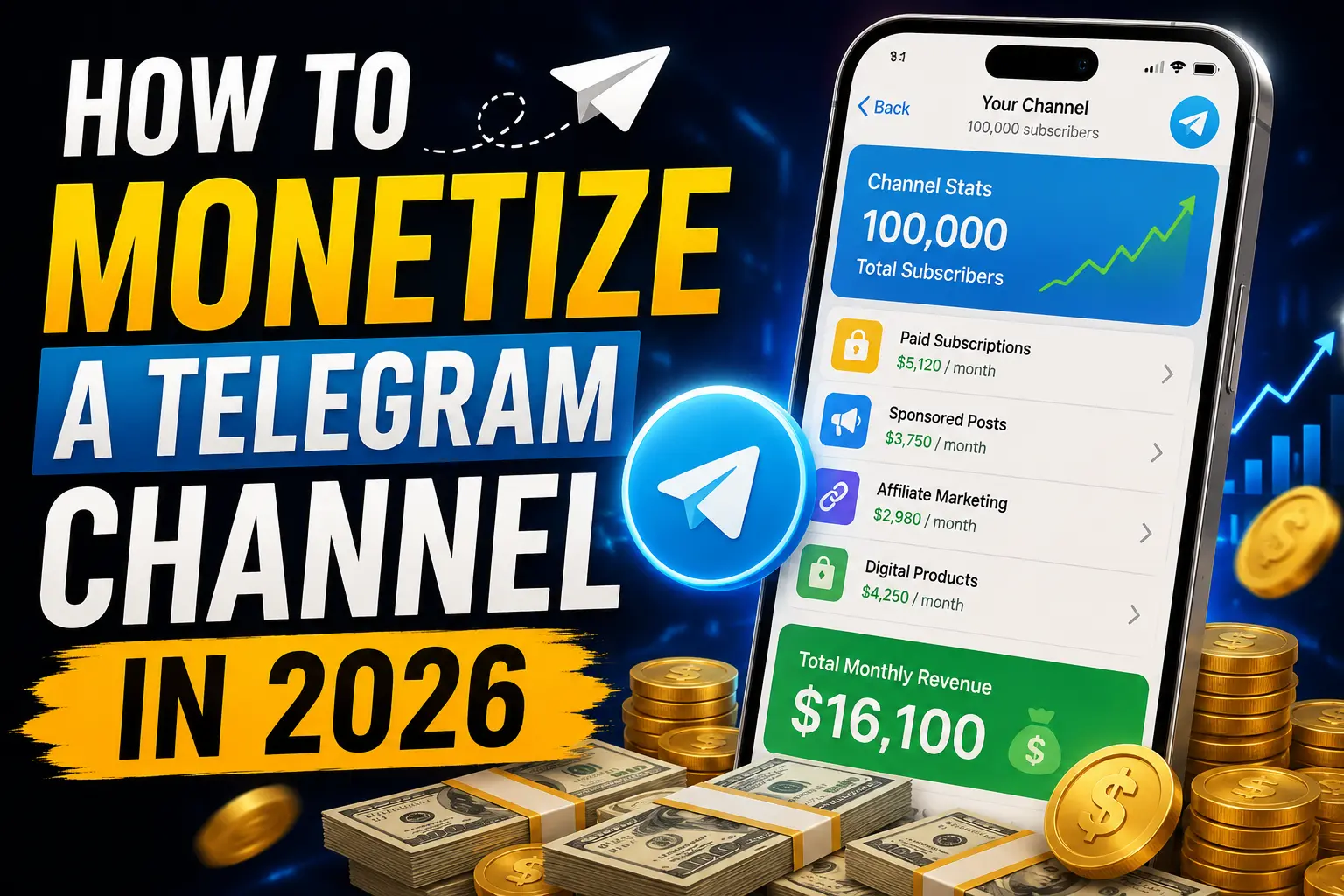
You've spent months building a Telegram channel. People actually show up, they read what you post, some of them even reply. And yet your bank balance hasn't noticed any of it. If that sounds familiar, you're sitting on something more valuable than you realize — you just haven't been shown how to turn it into income.
Telegram has quietly become one of the most underrated platforms for building real income in 2026, partly because so few creators actually understand how to monetize it properly. Most either give up, assuming Telegram "isn't built for money," or they fall for shady schemes promising instant riches from channel subscribers. Neither has to be true. This guide breaks down every legitimate way to earn from a Telegram channel, how much you can realistically expect, and how to avoid the scams currently flooding the space.
Table of Contents
- 1. Why Telegram Is a Real Income Channel Now
- 2. Sponsored Posts & Paid Shoutouts
- 3. Affiliate Links Inside Your Channel
- 4. Selling Your Own Digital Products
- 5. Telegram's Official Ad Platform
- 6. Paid Channels & Subscriptions
- 7. How Much Can You Realistically Earn?
- 8. Choosing the Right Monetization Mix
- 9. Avoiding Telegram "Investment" Scams
- 10. Frequently Asked Questions
Why Telegram Is a Real Income Channel Now
For years, Telegram was seen mostly as a messaging app for privacy-focused users and crypto communities. That's changed. Telegram now has hundreds of millions of active users globally, and unlike Instagram or TikTok, its algorithm doesn't bury your content — if someone joins your channel, they see what you post, every time, with no fight for attention against an unpredictable feed.
That reliability is exactly what makes it valuable for monetization. Brands and advertisers have started noticing that Telegram audiences tend to be more engaged and more trusting than audiences on algorithm-driven platforms, simply because people who join a channel usually do so intentionally, not by accident. A smaller, engaged Telegram audience can often out-earn a much larger, passive following elsewhere.
Sponsored Posts & Paid Shoutouts
This is the fastest, most direct way to start earning, and it doesn't require a massive channel to begin.
How it works. Brands or other channel owners pay you to post about their product, service, or channel to your audience. Payment is usually a flat fee based on your subscriber count and engagement, not a percentage of sales.
Where to find sponsors. You don't need to wait to be discovered. Telegram marketplaces like Telega.io and channels dedicated to advertiser-creator matchmaking let you list your channel and set your own rates. You can also reach out directly to brands that already align with your niche.
Realistic starting rates. Even a channel with 1,000-3,000 engaged subscribers can charge $10-40 per sponsored post. This scales quickly — channels in the 10,000+ range regularly charge $100-300 per post, and larger finance or crypto-focused channels can charge significantly more.
Affiliate Links Inside Your Channel
If your channel already shares recommendations, tools, or products, affiliate marketing is often the easiest first monetization method to add, because you're not asking your audience to trust something new, you're just adding a link to something you'd already be mentioning.
Pick affiliate programs that fit your niche. A finance channel might promote budgeting apps or investment platforms. A side-hustle channel might promote freelance tools or online course platforms. The tighter the fit, the higher your conversion rate.
Be transparent about it. Telegram audiences are usually sharper than average at spotting inauthentic recommendations. Being upfront that a link is an affiliate link, and genuinely only recommending things you'd use yourself, tends to convert better long-term than hiding it. If you're new to this side of things, our guide on affiliate passive income strategies walks through how to structure this properly from scratch.
Selling Your Own Digital Products
This is where a Telegram channel starts turning into a real, scalable business rather than a side income stream.
What sells well. Templates, mini-courses, curated resource packs, private group access, or done-for-you guides related to your channel's topic. If your channel is about side hustles, a $19 "starter kit" PDF with templates and checklists can sell consistently with zero ongoing production cost.
How to sell without a website. You don't need a full storefront. Payment links from Payhip, Selar, or Gumroad can be dropped directly into a pinned message or post, and buyers complete the purchase without ever leaving Telegram's ecosystem.
Telegram's Official Ad Platform
Telegram itself runs an official advertising program that shares revenue directly with channel owners, similar in spirit to YouTube's Partner Program.
Eligibility. This program is generally available to larger public channels, typically with at least 1,000 subscribers, though exact thresholds have shifted over time as Telegram expands the program.
How it works. Telegram inserts sponsored messages into your channel automatically, and you earn a share of the ad revenue based on views, paid out through Telegram's own system. It requires less active effort than manually finding sponsors, though the per-view payout is usually lower than direct sponsorship deals.
Paid Channels & Subscriptions
If you consistently deliver real value, some of your audience will pay for deeper access.
What this looks like in practice. A free public channel builds trust and audience, while a separate paid channel offers more detailed content, direct access to you, early information, or a smaller, more focused community. Common price points range from $5-25/month depending on niche and value delivered.
Why this compounds well. Unlike one-off sponsored posts, subscription income is recurring. Even a small paid group of 50 members at $10/month is $500 in predictable monthly income, something no single sponsored post can offer.
How Much Can You Realistically Earn?
Honest numbers matter more than hype here. Income depends heavily on niche, engagement, and consistency, not just subscriber count.
Under 1,000 subscribers. Expect modest but real income, usually $20-100/month combining small sponsorships and affiliate links, assuming genuine engagement rather than inactive members.
1,000-10,000 subscribers. This range is where most creators start seeing meaningful income, often $200-1,000+/month once sponsored posts, affiliate income, and a digital product are combined.
10,000+ subscribers. At this stage, well-run channels in profitable niches (finance, crypto, business) regularly earn well into four figures monthly, particularly once a paid subscription tier is added to the mix. Once this kind of income becomes consistent, a natural next question is what to actually do with it beyond letting it sit in a checking account — our breakdown of whether it's worth investing $100 a month in the UK is a good next read if turning Telegram income into long-term wealth interests you.
Choosing the Right Monetization Mix
Trying to do everything at once usually backfires, both for your income and for your audience's trust. A better approach is layering methods in order as your channel grows.
Start with affiliate links. Lowest effort, no audience size requirement, and it teaches you what your audience actually responds to.
Add sponsored posts once you have consistent engagement. Even a modest, loyal audience is sellable to the right sponsor.
Introduce a digital product or paid tier once you understand your audience's specific pain points. This is usually the highest-margin, most sustainable income source, but it works best once you know exactly what your audience wants.
Avoiding Telegram "Investment" Scams
Telegram unfortunately has a real reputation problem here, and it's worth addressing directly, especially since so many people arrive at Telegram monetization confused by scams they've already seen.
Channels promising "guaranteed daily returns" if you send crypto to a wallet, or offering to "double your investment in 48 hours" through a Telegram bot, are not monetization strategies, they're theft dressed up as opportunity. Real Telegram monetization involves delivering real value to real people who choose to pay for it, not moving money through unverifiable promises.
If you're building a channel and considering how to monetize it, treat every method in this guide the same way you'd want your own audience treated: transparently, with real value behind every dollar earned.
Want more real, no-scam strategies like this?
Join the CashFlow Chronicle Telegram CommunityFrequently Asked Questions
How many subscribers do I need to start monetizing a Telegram channel?
You can start with affiliate links and small sponsored posts at almost any size, even under 500 subscribers, as long as your audience is genuinely engaged. Telegram's official ad program typically requires around 1,000 subscribers, though this threshold has shifted over time.
Is Telegram monetization still worth it in 2026, given how saturated social media is?
Yes, largely because Telegram remains far less saturated than Instagram or TikTok for monetization specifically. Fewer creators understand how to do it properly, which means less competition for sponsors and affiliate attention within most niches.
Do I need a large audience for sponsored posts to be worthwhile?
No. Niche-specific channels with smaller, highly engaged audiences often earn better sponsorship rates per subscriber than large, generic channels, because advertisers value relevance and engagement over raw numbers.
What's the fastest way to start earning from an existing Telegram channel?
Affiliate links, by far. If you're already recommending tools, products, or services organically, adding an affiliate link requires no extra work and no minimum subscriber count.
How do I know if a Telegram monetization opportunity is a scam?
If it involves sending money upfront, promises guaranteed returns, or pressures you to act immediately without explaining the actual mechanism behind the earnings, treat it as a scam. Legitimate monetization always ties income to real value delivered, whether that's advertising, products, or content.